Unlock Your Vision: The Ultimate Creative Photography Course for Beginners
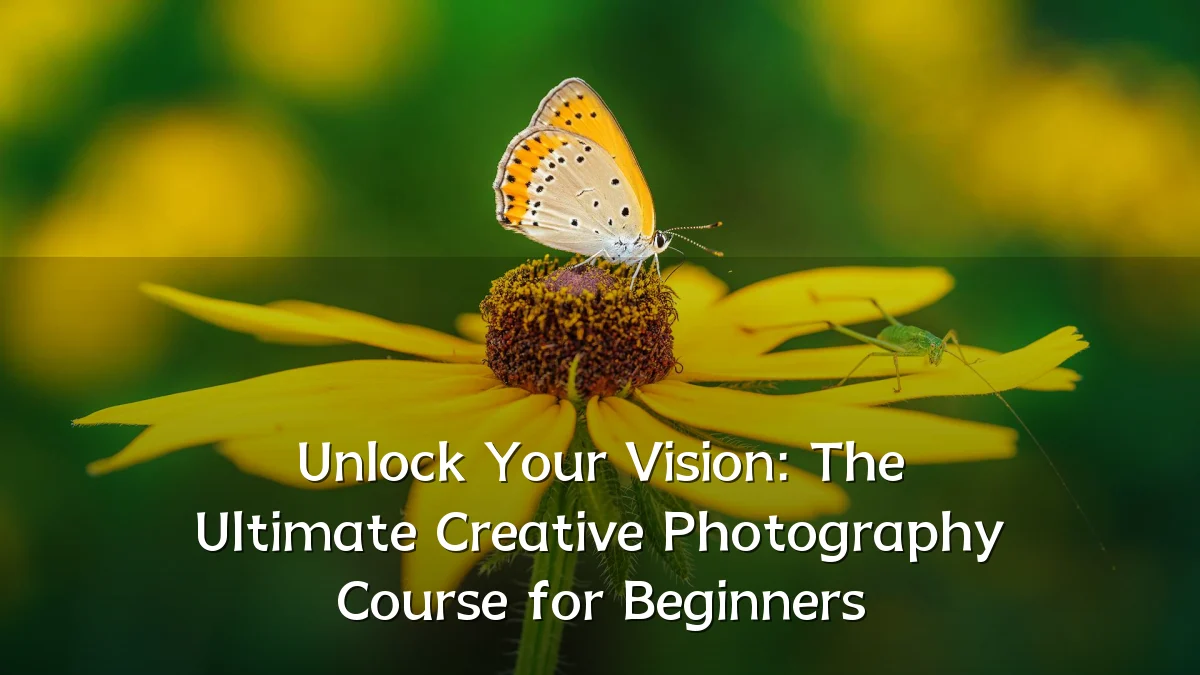
As more people pick up cameras—whether on smartphones or dedicated gear—the appetite for instruction that goes beyond exposure triangles and into artistic expression is growing. A course titled "Unlock Your Vision: The Ultimate Creative Photography Course for Beginners" sits at the intersection of this demand, promising to help newcomers find their personal style before they get lost in technical jargon. This analysis examines the trends, concerns, and likely ripple effects surrounding such a program.
Recent Trends
Over the past few years, photography education has shifted from purely technical manuals toward creativity-driven frameworks. Several factors drive this:
- Smartphone ubiquity – Almost everyone now carries a capable camera, lowering the barrier to entry and shifting focus from gear to vision.
- Social media pressure – Platforms reward unique perspectives, prompting beginners to seek courses that teach composition and storytelling rather than just aperture settings.
- Rise of visual content – From personal branding to small business marketing, non-professionals need photography skills that stand out, not just replicate standard shots.
- Microlessons and bite-sized learning – Many courses now offer modular, self-paced approaches that emphasize creative exercises over lengthy lectures.
Background
Traditional beginner photography courses have long centered on mastering camera controls—shutter speed, ISO, aperture—often leaving participants overwhelmed before they ever consider composition or mood. The "ultimate creative photography course" addresses a gap: it prioritizes visual literacy, concept development, and personal expression from the start. Instead of waiting until advanced levels to explore creativity, it places that search at the core of the beginner experience. This mirrors a broader educational move toward project-based and portfolio-building approaches in creative fields.

User Concerns
Potential enrollees commonly voice several hesitations about courses that emphasize creativity over pure technique:
- Fear of not being “creative enough” – Beginners worry that such courses assume innate artistic talent, when many just want clear, repeatable steps.
- Cost versus depth – Some question whether a broad “ultimate” course can deliver enough hands-on feedback, especially compared to one-on-one mentoring.
- Time commitment – Busy learners want to know if a creativity-focused course is more demanding than a technical primer, or if it can adapt to their schedule.
- Relevance to their equipment – Those with only a phone or entry-level camera may worry that creative exercises require gear they do not own.
- Measurable outcomes – Without concrete metrics (e.g., “master manual mode”), users look for clear examples of how a creative course improves real-world photos.
Likely Impact
If well-structured, a course of this nature can produce several tangible benefits for beginners and the photography education market:
- Increased confidence – Early emphasis on personal vision helps learners produce images they are proud of, reducing dropout rates common in purely technical courses.
- Better composition skills – Focus on elements like line, light, and narrative can translate across any camera, making the learning transferable.
- Portfolio acceleration – Creative exercises often yield cohesive mini-portfolios, which are useful for social media, applications, or freelance beginnings.
- Market differentiation – Such a course may attract students who previously avoided photography classes, expanding the overall audience for photography education.
- Risk of oversimplification – If the “ultimate” label promises too much, inconsistent quality could lead to disappointment and negative comparisons with established technical curricula.
What to Watch Next
Several developments will shape how this type of creative photography course evolves and whether it lives up to its aspirational title:
- Blended delivery models – Watch for courses that combine online creative theory with in-person walkabouts, especially in cities with photography communities.
- AI integration – As editing tools become more automated, creativity courses may shift even further from post-processing toward pre-visualization and in-camera artistry.
- Student portfolios and reviews – Early adopter galleries and candid feedback will be the clearest indicators of whether the course actually “unlocks vision” or just repackages standard content.
- Niche spin-offs – Success could encourage sub-courses for specific genres (street, portrait, nature) that still begin from a creative-first perspective.
- Partnerships with camera manufacturers – Brands may sponsor or co-create such courses to attract first-time camera buyers who value creative potential over spec sheets.
The coming year will test whether a beginner course centered on creative vision can sustain long-term interest, or if the pendulum swings back to technical fundamentals. For now, the conversation around photography education is undeniably richer when creativity leads.